Communication Protocols
Agents that can't speak the same language aren't a team. They're strangers shouting into the void.
Lesson 3 of 25Build~120 minutesTypeScript
Before this: Phase 14 (Agent Engineering), Lesson 16.01 (Why Multi-Agent)
On this page
Learning Objectives
- Implement MCP tool discovery and invocation so agents can use tools exposed by external servers
- Build an A2A agent card and task endpoint that allows one agent to delegate work to another over HTTP
- Compare MCP (tool access), A2A (agent-to-agent), ACP (enterprise audit), and ANP (decentralized trust) and explain which protocol solves which problem
- Wire multiple protocols together in a single system where agents discover tools via MCP and delegate tasks via A2A
The Problem
You split your system into multiple agents. A researcher, a coder, a reviewer. They're great at their individual jobs. But now you need them to actually talk to each other.
Your first attempt is obvious: pass strings around. The researcher returns a blob of text, the coder parses it however it can. It works until the coder misinterprets a research summary, or two agents deadlock waiting for each other, or you need agents built by different teams to collaborate. Suddenly "just pass strings" falls apart.
This is the communication protocol problem. Without a shared contract for how agents exchange information, multi-agent systems are fragile, unauditable, and impossible to scale beyond a handful of agents you personally wrote.
The AI ecosystem has responded with four protocols, each solving a different slice of the problem:
- MCP for tool access
- A2A for agent-to-agent collaboration
- ACP for enterprise auditability
- ANP for decentralized identity and trust
This lesson goes deep. You will read real wire formats from each spec, build working implementations, and connect all four into a unified system.
The Concept
The Protocol Landscape
Think of these four protocols as layers, each addressing a different question:


They're not competitors. They solve different problems at different levels.
MCP (Recap)
MCP is covered in depth in Phase 13. Quick recap: MCP standardizes how an LLM connects to external tools and data sources. It's a client-server protocol where the agent (client) discovers and calls tools exposed by a server.
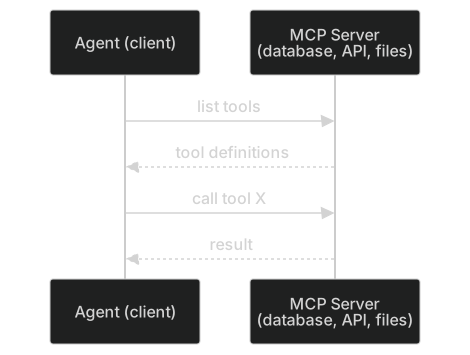
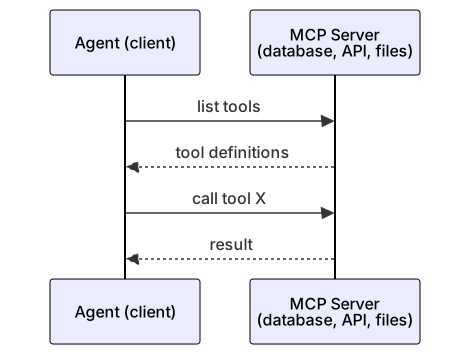
MCP is agent-to-tool communication. It doesn't help agents talk to each other.
A2A (Agent2Agent Protocol)
Created by: Google (now under Linux Foundation as lf.a2a.v1)
Spec version: 1.0.1
Problem: How do autonomous agents collaborate, negotiate, and delegate tasks to each other?
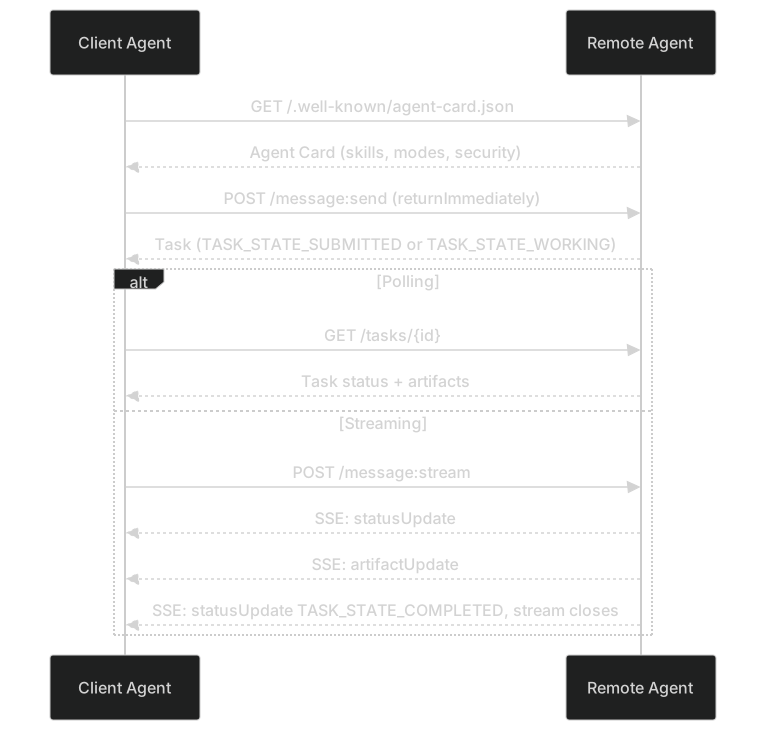
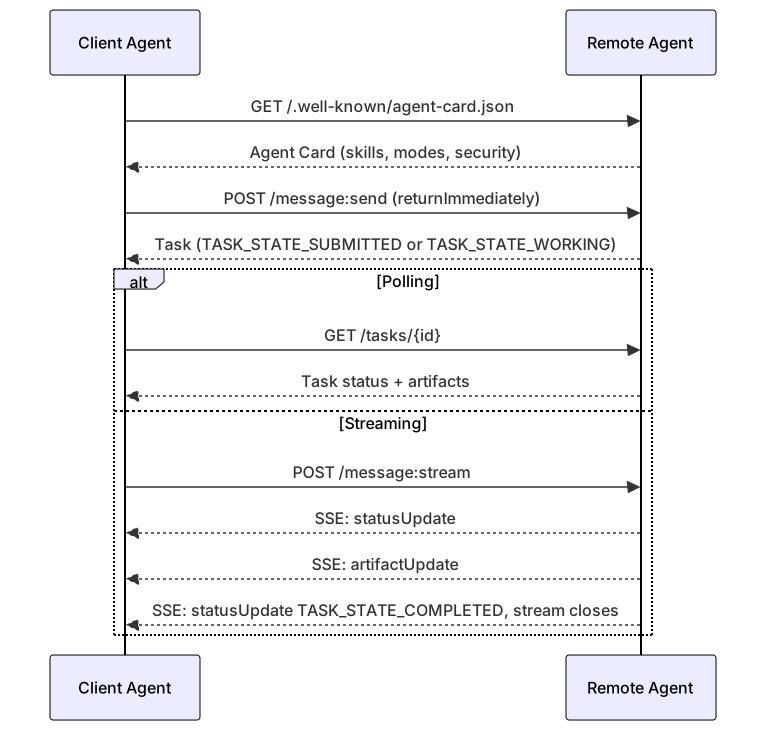
A2A is the protocol for peer-to-peer agent collaboration. Where MCP connects an agent to tools, A2A connects an agent to other agents. Each agent publishes an Agent Card at a well-known URL, and other agents discover, negotiate with, and delegate tasks to it.
How A2A Works
The Real Agent Card
This is what an A2A Agent Card actually looks like in the wild. Served at GET /.well-known/agent-card.json:
{
  "name": "Research Agent",
  "description": "Searches documentation and summarizes findings",
  "version": "1.0.0",
  "supportedInterfaces": [
    {
      "url": "https://research-agent.example.com/a2a/v1",
      "protocolBinding": "JSONRPC",
      "protocolVersion": "1.0"
    },
    {
      "url": "https://research-agent.example.com/a2a/rest",
      "protocolBinding": "HTTP+JSON",
      "protocolVersion": "1.0"
    }
  ],
  "provider": {
    "organization": "Your Company",
    "url": "https://example.com"
  },
  "capabilities": {
    "streaming": true,
    "pushNotifications": false
  },
  "defaultInputModes": ["text/plain", "application/json"],
  "defaultOutputModes": ["text/plain", "application/json"],
  "skills": [
    {
      "id": "web-research",
      "name": "Web Research",
      "description": "Searches the web and synthesizes findings",
      "tags": ["research", "search", "summarization"],
      "examples": ["Research the latest changes in React 19"]
    },
    {
      "id": "doc-analysis",
      "name": "Documentation Analysis",
      "description": "Reads and analyzes technical documentation",
      "tags": ["docs", "analysis"],
      "inputModes": ["text/plain", "application/pdf"],
      "outputModes": ["application/json"]
    }
  ],
  "securitySchemes": {
    "bearer": {
      "httpAuthSecurityScheme": {
        "scheme": "Bearer",
        "bearerFormat": "JWT"
      }
    }
  },
  "securityRequirements": [{ "schemes": { "bearer": { "list": [] } } }]
}
Key things to notice:
- Skills are what an agent can do. Each has an ID, tags, and supported input/output MIME types. This is how a client agent decides whether this remote agent can handle its request.
- supportedInterfaces lists multiple protocol bindings. A single agent can speak JSON-RPC, REST, and gRPC simultaneously.
- Security is built into the card:
securitySchemesnames each scheme andsecurityRequirementssays which ones apply. The client knows what auth it needs before making a single request.
Task Lifecycle
Tasks are the core unit of work in A2A. They move through defined states (the diagram drops the TASK_STATE_ prefix that every state carries on the wire):


All 8 states (the spec also defines UNSPECIFIED as a sentinel, omitted here):
| State | Terminal? | Meaning |
|---|---|---|
TASK_STATE_SUBMITTED |
No | Acknowledged, not yet processing |
TASK_STATE_WORKING |
No | Actively being processed |
TASK_STATE_INPUT_REQUIRED |
No | Agent needs more info from client |
TASK_STATE_AUTH_REQUIRED |
No | Authentication needed |
TASK_STATE_COMPLETED |
Yes | Finished successfully |
TASK_STATE_FAILED |
Yes | Finished with error |
TASK_STATE_CANCELED |
Yes | Canceled before completion |
TASK_STATE_REJECTED |
Yes | Agent declined the task |
Once a task reaches a terminal state, it's immutable. No further messages. Follow-ups create a new task within the same contextId.
Wire Format
A2A uses JSON-RPC 2.0. Here's what a real message exchange looks like:
Client sends a message:
{
  "jsonrpc": "2.0",
  "id": 1,
  "method": "SendMessage",
  "params": {
    "message": {
      "messageId": "msg-001",
      "role": "ROLE_USER",
      "parts": [{ "text": "Research React 19 compiler features" }]
    },
    "configuration": {
      "acceptedOutputModes": ["text/plain", "application/json"],
      "historyLength": 10
    }
  }
}
Agent responds with a task:
{
  "jsonrpc": "2.0",
  "id": 1,
  "result": {
    "task": {
      "id": "task-abc-123",
      "contextId": "ctx-xyz-789",
      "status": {
        "state": "TASK_STATE_COMPLETED",
        "timestamp": "2026-03-27T10:30:00Z"
      },
      "artifacts": [
        {
          "artifactId": "art-001",
          "name": "research-results",
          "parts": [{
            "data": {
              "findings": [
                "React 19 compiler auto-memoizes components",
                "No more manual useMemo/useCallback needed",
                "Compiler runs at build time, not runtime"
              ]
            },
            "mediaType": "application/json"
          }]
        }
      ]
    }
  }
}
Streaming via SSE:
POST /message:stream HTTP/1.1
Content-Type: application/a2a+json
A2A-Version: 1.0

data: {"task":{"id":"task-123","contextId":"ctx-123","status":{"state":"TASK_STATE_WORKING"}}}

data: {"statusUpdate":{"taskId":"task-123","contextId":"ctx-123","status":{"state":"TASK_STATE_WORKING","message":{"messageId":"msg-002","role":"ROLE_AGENT","parts":[{"text":"Searching documentation..."}]}}}}

data: {"artifactUpdate":{"taskId":"task-123","contextId":"ctx-123","artifact":{"artifactId":"art-1","parts":[{"text":"partial findings..."}]},"append":true,"lastChunk":false}}

data: {"statusUpdate":{"taskId":"task-123","contextId":"ctx-123","status":{"state":"TASK_STATE_COMPLETED"}}}
ACP (Agent Communication Protocol)
Created by: IBM / BeeAI Spec version: 0.2.0 (OpenAPI 3.1.1) Status: Merging into A2A under the Linux Foundation Problem: How do agents communicate with full auditability, session continuity, and trajectory tracking?
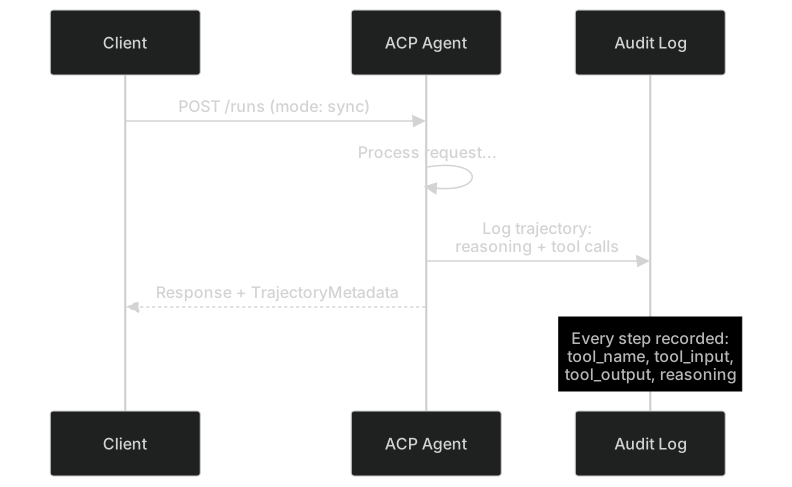
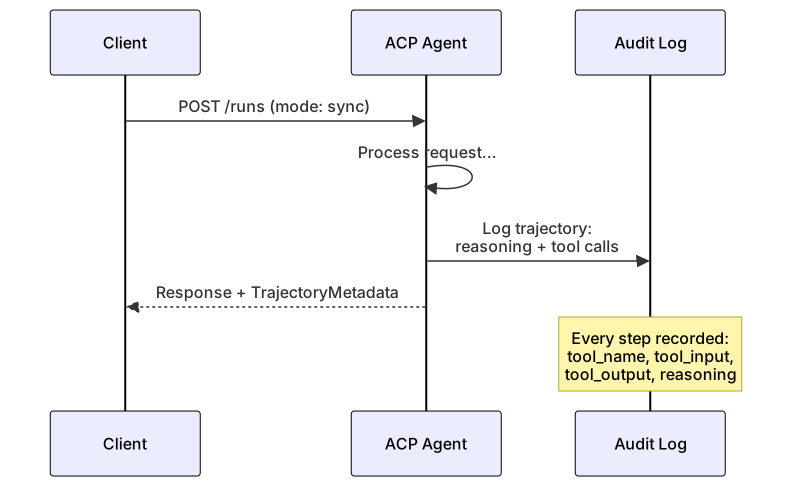
ACP is the enterprise protocol. Unlike what many summaries claim, ACP does not use JSON-LD. It's a straightforward REST/JSON API defined via OpenAPI. What makes it special is TrajectoryMetadata: every agent response can carry a detailed log of the reasoning steps and tool calls that produced it.
Agent Discovery in ACP
ACP defines four discovery methods:


The AgentManifest is simpler than A2A's Agent Card:
{
  "name": "summarizer",
  "description": "Summarizes documents with source citations",
  "input_content_types": ["text/plain", "application/pdf"],
  "output_content_types": ["text/plain", "application/json"],
  "metadata": {
    "tags": ["summarization", "RAG"],
    "framework": "BeeAI",
    "capabilities": [
      {
        "name": "Document Summarization",
        "description": "Condenses long documents into key points"
      }
    ],
    "recommended_models": ["llama3.3:70b-instruct-fp16"],
    "license": "Apache-2.0",
    "programming_language": "Python"
  }
}
Run Lifecycle
ACP uses "Runs" instead of "Tasks". A Run is an agent execution with three modes:
| Mode | Behavior |
|---|---|
sync |
Blocking. Response contains the complete result. |
async |
Returns 202 immediately. Poll GET /runs/{id} for status. |
stream |
SSE stream. Events fire as the agent works. |


TrajectoryMetadata (The Audit Trail)
This is ACP's key differentiator. Every message part can include metadata showing exactly what the agent did:
{
  "role": "agent/researcher",
  "parts": [
    {
      "content_type": "text/plain",
      "content": "The weather in San Francisco is 72F and sunny.",
      "metadata": {
        "kind": "trajectory",
        "message": "I need to check the weather for this location",
        "tool_name": "weather_api",
        "tool_input": { "location": "San Francisco, CA" },
        "tool_output": { "temperature": 72, "condition": "sunny" }
      }
    }
  ]
}
For regulated industries this is gold. Every answer comes with a provable chain of reasoning: which tools were called, what inputs were used, what outputs were received. No black box.
ACP also supports CitationMetadata for source attribution:
{
  "kind": "citation",
  "start_index": 0,
  "end_index": 47,
  "url": "https://weather.gov/sf",
  "title": "NWS San Francisco Forecast"
}
ANP (Agent Network Protocol)
Created by: Open-source community (founded by GaoWei Chang) Repo: github.com/agent-network-protocol/AgentNetworkProtocol Problem: How do agents from different organizations trust each other without a central authority?
ANP is the decentralized identity protocol. It builds trust using W3C Decentralized Identifiers (DIDs) and end-to-end encryption. Unlike A2A where you discover agents through known endpoints, ANP lets agents prove their identity cryptographically.
ANP has three layers:


DID Documents (Real Structure)
ANP uses a custom DID method called did:wba (Web-Based Agent). The DID did:wba:example.com:user:alice resolves to https://example.com/user/alice/did.json:
{
  "@context": [
    "https://www.w3.org/ns/did/v1",
    "https://w3id.org/security/suites/jws-2020/v1",
    "https://w3id.org/security/suites/secp256k1-2019/v1"
  ],
  "id": "did:wba:example.com:user:alice",
  "verificationMethod": [
    {
      "id": "did:wba:example.com:user:alice#key-1",
      "type": "EcdsaSecp256k1VerificationKey2019",
      "controller": "did:wba:example.com:user:alice",
      "publicKeyJwk": {
        "crv": "secp256k1",
        "x": "NtngWpJUr-rlNNbs0u-Aa8e16OwSJu6UiFf0Rdo1oJ4",
        "y": "qN1jKupJlFsPFc1UkWinqljv4YE0mq_Ickwnjgasvmo",
        "kty": "EC"
      }
    },
    {
      "id": "did:wba:example.com:user:alice#key-x25519-1",
      "type": "X25519KeyAgreementKey2019",
      "controller": "did:wba:example.com:user:alice",
      "publicKeyMultibase": "z9hFgmPVfmBZwRvFEyniQDBkz9LmV7gDEqytWyGZLmDXE"
    }
  ],
  "authentication": [
    "did:wba:example.com:user:alice#key-1"
  ],
  "keyAgreement": [
    "did:wba:example.com:user:alice#key-x25519-1"
  ],
  "humanAuthorization": [
    "did:wba:example.com:user:alice#key-1"
  ],
  "service": [
    {
      "id": "did:wba:example.com:user:alice#agent-description",
      "type": "AgentDescription",
      "serviceEndpoint": "https://example.com/agents/alice/ad.json"
    }
  ]
}
Key things to notice:
- Key separation is enforced. Signing keys (secp256k1) are separate from encryption keys (X25519).
humanAuthorizationis unique to ANP. These keys require explicit human approval (biometric, password, HSM) before use. High-risk operations like fund transfers go through this path.keyAgreementkeys are used for HPKE end-to-end encryption (RFC 9180).- The service section links to the Agent Description document.
How Trust Works in ANP
ANP does not use a web-of-trust or endorsement graph. Trust is bilateral and verified per-interaction:
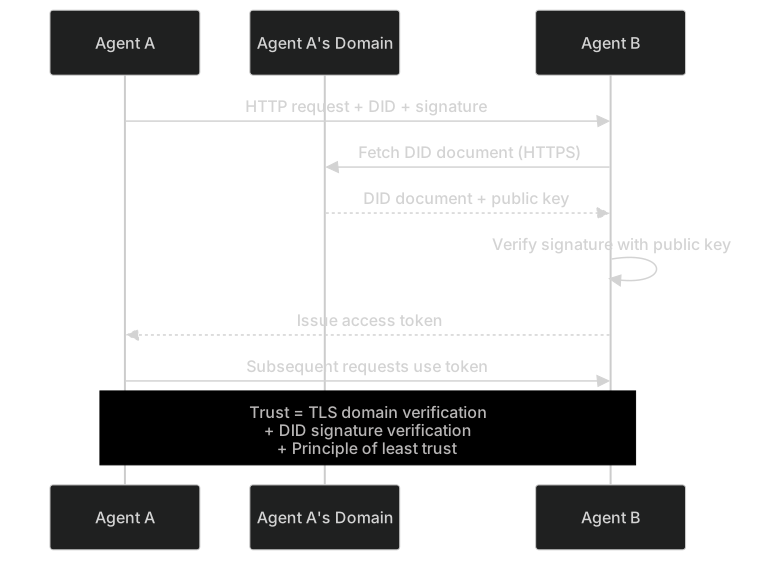
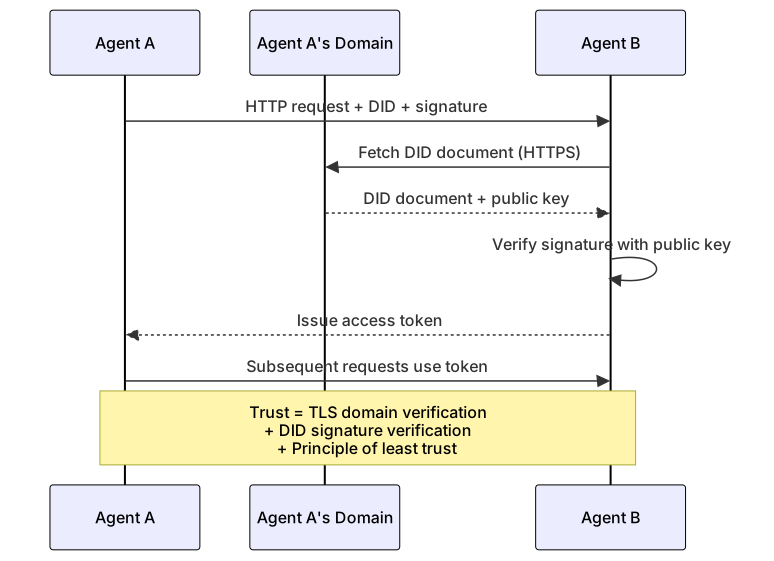
Trust comes from three sources:
- Domain-level TLS verifies the DID document host
- DID cryptographic signatures verify the agent's identity
- Principle of least trust grants only minimum permissions
There's no gossip-based trust propagation or PageRank scoring. You verify each agent directly through its DID.
Meta-Protocol Negotiation
This is ANP's most novel feature. When two agents from different ecosystems meet, they don't need pre-agreed data formats. They negotiate in natural language:
{
  "action": "protocolNegotiation",
  "sequenceId": 0,
  "candidateProtocols": "I can communicate using:\n1. JSON-RPC with hotel booking schema\n2. REST with OpenAPI 3.1 spec\n3. Natural language over HTTP",
  "modificationSummary": "Initial proposal",
  "status": "negotiating"
}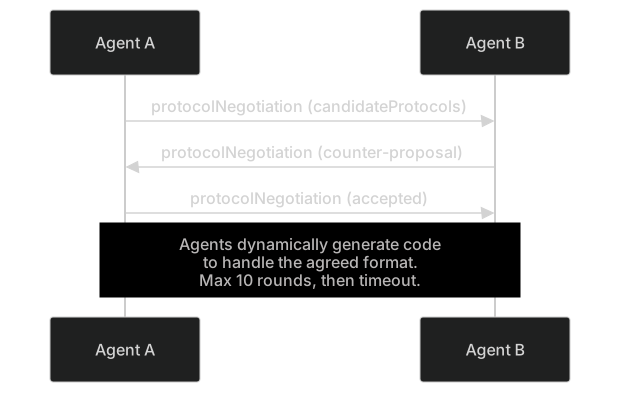
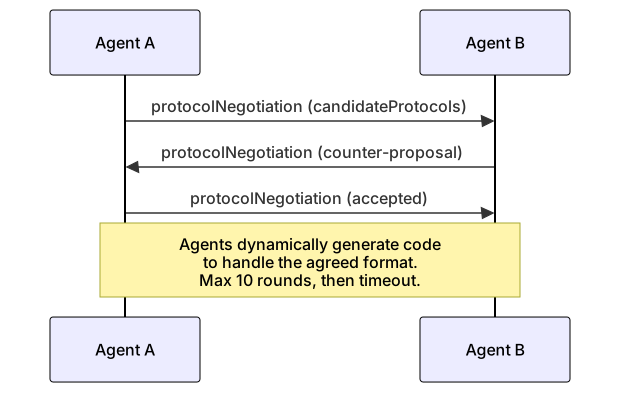
The agents go back and forth (max 10 rounds) until they agree on a format, then dynamically generate code to handle it. Status values: negotiating, rejected, accepted, timeout.
This means two agents that have never seen each other before can figure out how to communicate without anyone pre-defining a shared schema.
Comparison (Corrected)
| MCP | A2A | ACP | ANP | |
|---|---|---|---|---|
| Created by | Anthropic | Google / Linux Foundation | IBM / BeeAI | Community |
| Spec format | JSON-RPC | JSON-RPC / REST / gRPC | OpenAPI 3.1 (REST) | JSON-RPC |
| Primary use | Agent to Tool | Agent to Agent | Agent to Agent | Agent to Agent |
| Discovery | Tool listing | /.well-known/agent-card.json |
GET /agents, /.well-known/agent.yml |
/.well-known/agent-descriptions, DID service endpoints |
| Identity | Implicit (local) | Security schemes (OAuth, mTLS) | Server-level | W3C DID (did:wba) with E2EE |
| Audit trail | N/A | Basic (task history) | TrajectoryMetadata (tool calls, reasoning) | Not formally specified |
| State machine | N/A | 9 task states | 7 run states | N/A |
| Streaming | N/A | SSE | SSE | Transport-agnostic |
| Unique feature | Tool schemas | Agent Cards + Skills | Trajectory audit trail | Meta-protocol negotiation |
| Best for | Tools & data | Dynamic collaboration | Regulated industries | Cross-org trust |
| Status | Stable | Stable (v1.0) | Merging into A2A | Active development |
How They Work Together
These protocols are not mutually exclusive. A realistic enterprise system uses multiple:


- MCP connects each agent to its tools
- A2A handles collaboration between agents (internal and external)
- ACP wraps responses in trajectory metadata for auditability
- ANP provides identity verification for agents you don't control
swarm-message-busBuild It
Step 1: Core Message Types
Every multi-agent system starts with a message format. We define types that map to what the real protocols use:
import crypto from "node:crypto";

type MessageRole = "ROLE_USER" | "ROLE_AGENT";

type MessagePart =
  | { text: string }
  | { data: unknown; mediaType: string }
  | { url: string; filename: string; mediaType: string };

type TrajectoryEntry = {
  reasoning: string;
  toolName?: string;
  toolInput?: unknown;
  toolOutput?: unknown;
  timestamp: number;
};

type AgentMessage = {
  id: string;
  role: MessageRole;
  parts: MessagePart[];
  trajectory?: TrajectoryEntry[];
  replyTo?: string;
  timestamp: number;
};

function createMessage(
  role: MessageRole,
  parts: MessagePart[],
  replyTo?: string
): AgentMessage {
  return {
    id: crypto.randomUUID(),
    role,
    parts,
    replyTo,
    timestamp: Date.now(),
  };
}

function textMessage(role: MessageRole, text: string): AgentMessage {
  return createMessage(role, [{ text }]);
}
Notice: MessagePart is multimodal (text, structured data, files) just like the real A2A and ACP specs. As in A2A 1.0, the field that is present (text, data, or url) says what the part is; there is no kind tag. TrajectoryEntry captures the reasoning chain, matching ACP's TrajectoryMetadata.
Step 2: A2A Agent Card and Registry
Build agent discovery that matches the real A2A spec:
type Skill = {
  id: string;
  name: string;
  description: string;
  tags: string[];
  inputModes: string[];
  outputModes: string[];
};

type AgentInterface = {
  url: string;
  protocolBinding: string;
  protocolVersion: string;
};

type AgentCard = {
  name: string;
  description: string;
  version: string;
  supportedInterfaces: AgentInterface[];
  capabilities: {
    streaming: boolean;
    pushNotifications: boolean;
  };
  defaultInputModes: string[];
  defaultOutputModes: string[];
  skills: Skill[];
};

class AgentRegistry {
  private cards: Map<string, AgentCard> = new Map();

  register(card: AgentCard) {
    this.cards.set(card.name, card);
  }

  discoverBySkillTag(tag: string): AgentCard[] {
    return [...this.cards.values()].filter((card) =>
      card.skills.some((skill) => skill.tags.includes(tag))
    );
  }

  discoverByInputMode(mimeType: string): AgentCard[] {
    return [...this.cards.values()].filter(
      (card) =>
        card.defaultInputModes.includes(mimeType) ||
        card.skills.some((skill) => skill.inputModes.includes(mimeType))
    );
  }

  resolve(name: string): AgentCard | undefined {
    return this.cards.get(name);
  }

  listAll(): AgentCard[] {
    return [...this.cards.values()];
  }
}
This is substantially richer than a simple name-to-capability map. You can discover agents by skill tags, by input MIME types, or by name, just like the real A2A spec supports.
Step 3: A2A Task Lifecycle
Build the full task state machine:
type TaskState =
  | "TASK_STATE_SUBMITTED"
  | "TASK_STATE_WORKING"
  | "TASK_STATE_INPUT_REQUIRED"
  | "TASK_STATE_AUTH_REQUIRED"
  | "TASK_STATE_COMPLETED"
  | "TASK_STATE_FAILED"
  | "TASK_STATE_CANCELED"
  | "TASK_STATE_REJECTED";

const TERMINAL_STATES: TaskState[] = [
  "TASK_STATE_COMPLETED",
  "TASK_STATE_FAILED",
  "TASK_STATE_CANCELED",
  "TASK_STATE_REJECTED",
];

type TaskStatus = {
  state: TaskState;
  message?: AgentMessage;
  timestamp: number;
};

type Artifact = {
  id: string;
  name: string;
  parts: MessagePart[];
};

type Task = {
  id: string;
  contextId: string;
  status: TaskStatus;
  artifacts: Artifact[];
  history: AgentMessage[];
};

type TaskEvent =
  | { statusUpdate: { taskId: string; status: TaskStatus } }
  | {
      artifactUpdate: {
        taskId: string;
        artifact: Artifact;
        append: boolean;
        lastChunk: boolean;
      };
    };

type TaskHandler = (
  task: Task,
  message: AgentMessage
) => AsyncGenerator<TaskEvent>;

class TaskManager {
  private tasks: Map<string, Task> = new Map();
  private handlers: Map<string, TaskHandler> = new Map();
  private listeners: Map<string, ((event: TaskEvent) => void)[]> = new Map();

  registerHandler(agentName: string, handler: TaskHandler) {
    this.handlers.set(agentName, handler);
  }

  subscribe(taskId: string, listener: (event: TaskEvent) => void) {
    const existing = this.listeners.get(taskId) ?? [];
    existing.push(listener);
    this.listeners.set(taskId, existing);
  }

  async sendMessage(
    agentName: string,
    message: AgentMessage,
    contextId?: string
  ): Promise<Task> {
    const handler = this.handlers.get(agentName);
    if (!handler) {
      const task = this.createTask(contextId);
      task.status = {
        state: "TASK_STATE_REJECTED",
        timestamp: Date.now(),
        message: textMessage("ROLE_AGENT", `No handler for ${agentName}`),
      };
      return task;
    }

    const task = this.createTask(contextId);
    task.history.push(message);
    task.status = { state: "TASK_STATE_SUBMITTED", timestamp: Date.now() };

    this.processTask(task, handler, message).catch((err) => {
      task.status = {
        state: "TASK_STATE_FAILED",
        timestamp: Date.now(),
        message: textMessage("ROLE_AGENT", String(err)),
      };
    });
    return task;
  }

  getTask(taskId: string): Task | undefined {
    return this.tasks.get(taskId);
  }

  cancelTask(taskId: string): boolean {
    const task = this.tasks.get(taskId);
    if (!task || TERMINAL_STATES.includes(task.status.state)) return false;
    task.status = { state: "TASK_STATE_CANCELED", timestamp: Date.now() };
    this.emit(taskId, {
      statusUpdate: { taskId, status: task.status },
    });
    return true;
  }

  private createTask(contextId?: string): Task {
    const task: Task = {
      id: crypto.randomUUID(),
      contextId: contextId ?? crypto.randomUUID(),
      status: { state: "TASK_STATE_SUBMITTED", timestamp: Date.now() },
      artifacts: [],
      history: [],
    };
    this.tasks.set(task.id, task);
    return task;
  }

  private async processTask(
    task: Task,
    handler: TaskHandler,
    message: AgentMessage
  ) {
    task.status = { state: "TASK_STATE_WORKING", timestamp: Date.now() };
    this.emit(task.id, {
      statusUpdate: { taskId: task.id, status: task.status },
    });

    try {
      for await (const event of handler(task, message)) {
        if (TERMINAL_STATES.includes(task.status.state)) break;

        if ("statusUpdate" in event) {
          task.status = event.statusUpdate.status;
        }
        if ("artifactUpdate" in event) {
          const update = event.artifactUpdate;
          const existing = task.artifacts.find(
            (a) => a.id === update.artifact.id
          );
          if (existing && update.append) {
            existing.parts.push(...update.artifact.parts);
          } else {
            task.artifacts.push(update.artifact);
          }
        }
        this.emit(task.id, event);
      }
    } catch (err) {
      task.status = {
        state: "TASK_STATE_FAILED",
        timestamp: Date.now(),
        message: textMessage("ROLE_AGENT", String(err)),
      };
      this.emit(task.id, {
        statusUpdate: { taskId: task.id, status: task.status },
      });
    }
  }

  private emit(taskId: string, event: TaskEvent) {
    for (const listener of this.listeners.get(taskId) ?? []) {
      listener(event);
    }
  }
}
This implements the real A2A task lifecycle: TASK_STATE_SUBMITTED, TASK_STATE_WORKING, TASK_STATE_INPUT_REQUIRED, then a terminal state. Handlers are async generators that yield statusUpdate and artifactUpdate events, the same wrappers the SSE stream carries.
Step 4: ACP-Style Audit Trail
Wrap communication with trajectory tracking:
type AuditEntry = {
  runId: string;
  agentName: string;
  input: AgentMessage[];
  output: AgentMessage[];
  trajectory: TrajectoryEntry[];
  status: "created" | "in-progress" | "completed" | "failed" | "awaiting";
  startedAt: number;
  completedAt?: number;
  sessionId?: string;
};

class AuditableRunner {
  private log: AuditEntry[] = [];
  private handlers: Map<
    string,
    (input: AgentMessage[]) => Promise<{
      output: AgentMessage[];
      trajectory: TrajectoryEntry[];
    }>
  > = new Map();

  registerAgent(
    name: string,
    handler: (input: AgentMessage[]) => Promise<{
      output: AgentMessage[];
      trajectory: TrajectoryEntry[];
    }>
  ) {
    this.handlers.set(name, handler);
  }

  async run(
    agentName: string,
    input: AgentMessage[],
    sessionId?: string
  ): Promise<AuditEntry> {
    const entry: AuditEntry = {
      runId: crypto.randomUUID(),
      agentName,
      input: structuredClone(input),
      output: [],
      trajectory: [],
      status: "created",
      startedAt: Date.now(),
      sessionId,
    };
    this.log.push(entry);

    const handler = this.handlers.get(agentName);
    if (!handler) {
      entry.status = "failed";
      return entry;
    }

    entry.status = "in-progress";
    try {
      const result = await handler(input);
      entry.output = structuredClone(result.output);
      entry.trajectory = structuredClone(result.trajectory);
      entry.status = "completed";
      entry.completedAt = Date.now();
    } catch (err) {
      entry.status = "failed";
      entry.trajectory.push({
        reasoning: `Error: ${String(err)}`,
        timestamp: Date.now(),
      });
      entry.completedAt = Date.now();
    }
    return entry;
  }

  getFullAuditLog(): AuditEntry[] {
    return structuredClone(this.log);
  }

  getAuditLogForAgent(agentName: string): AuditEntry[] {
    return structuredClone(
      this.log.filter((e) => e.agentName === agentName)
    );
  }

  getAuditLogForSession(sessionId: string): AuditEntry[] {
    return structuredClone(
      this.log.filter((e) => e.sessionId === sessionId)
    );
  }

  getTrajectoryForRun(runId: string): TrajectoryEntry[] {
    const entry = this.log.find((e) => e.runId === runId);
    return entry ? structuredClone(entry.trajectory) : [];
  }
}
Every agent execution produces a full audit entry: what went in, what came out, and the complete trajectory of tool calls and reasoning steps in between. You can query by agent, by session, or by individual run.
Step 5: ANP-Style Identity Verification
Build DID-based identity and verification:
type VerificationMethod = {
  id: string;
  type: string;
  controller: string;
  publicKeyDer: string;
};

type DIDDocument = {
  id: string;
  verificationMethod: VerificationMethod[];
  authentication: string[];
  keyAgreement: string[];
  humanAuthorization: string[];
  service: { id: string; type: string; serviceEndpoint: string }[];
};

type AgentIdentity = {
  did: string;
  document: DIDDocument;
  privateKey: crypto.KeyObject;
  publicKey: crypto.KeyObject;
};

class IdentityRegistry {
  private documents: Map<string, DIDDocument> = new Map();

  publish(doc: DIDDocument) {
    this.documents.set(doc.id, doc);
  }

  resolve(did: string): DIDDocument | undefined {
    return this.documents.get(did);
  }

  verify(did: string, signature: string, payload: string): boolean {
    const doc = this.documents.get(did);
    if (!doc) return false;

    const authKeyIds = doc.authentication;
    const authKeys = doc.verificationMethod.filter((vm) =>
      authKeyIds.includes(vm.id)
    );

    for (const key of authKeys) {
      const publicKey = crypto.createPublicKey({
        key: Buffer.from(key.publicKeyDer, "base64"),
        format: "der",
        type: "spki",
      });
      const isValid = crypto.verify(
        null,
        Buffer.from(payload),
        publicKey,
        Buffer.from(signature, "hex")
      );
      if (isValid) return true;
    }
    return false;
  }

  requiresHumanAuth(did: string, operationKeyId: string): boolean {
    const doc = this.documents.get(did);
    if (!doc) return false;
    return doc.humanAuthorization.includes(operationKeyId);
  }
}

function createIdentity(domain: string, agentName: string): AgentIdentity {
  const did = `did:wba:${domain}:agent:${agentName}`;
  const { publicKey, privateKey } = crypto.generateKeyPairSync("ed25519");

  const publicKeyDer = publicKey
    .export({ format: "der", type: "spki" })
    .toString("base64");

  const keyId = `${did}#key-1`;
  const encKeyId = `${did}#key-x25519-1`;

  const document: DIDDocument = {
    id: did,
    verificationMethod: [
      {
        id: keyId,
        type: "Ed25519VerificationKey2020",
        controller: did,
        publicKeyDer,
      },
      {
        id: encKeyId,
        type: "X25519KeyAgreementKey2019",
        controller: did,
        publicKeyDer,
      },
    ],
    authentication: [keyId],
    keyAgreement: [encKeyId],
    humanAuthorization: [],
    service: [
      {
        id: `${did}#agent-description`,
        type: "AgentDescription",
        serviceEndpoint: `https://${domain}/agents/${agentName}/ad.json`,
      },
    ],
  };

  return { did, document, privateKey, publicKey };
}

function signPayload(identity: AgentIdentity, payload: string): string {
  return crypto
    .sign(null, Buffer.from(payload), identity.privateKey)
    .toString("hex");
}
This mirrors the real ANP identity model: agents have DID documents with separate authentication, key agreement, and human authorization keys. The IdentityRegistry simulates DID resolution (in production this would be HTTP fetches to the agent's domain).
Step 6: Protocol Gateway
Connect all four protocols into a unified system:


class ProtocolGateway {
  private registry: AgentRegistry;
  private taskManager: TaskManager;
  private auditRunner: AuditableRunner;
  private identityRegistry: IdentityRegistry;

  constructor(
    registry: AgentRegistry,
    taskManager: TaskManager,
    auditRunner: AuditableRunner,
    identityRegistry: IdentityRegistry
  ) {
    this.registry = registry;
    this.taskManager = taskManager;
    this.auditRunner = auditRunner;
    this.identityRegistry = identityRegistry;
  }

  async delegateTask(
    fromDid: string,
    signature: string,
    targetAgent: string,
    message: AgentMessage,
    sessionId?: string
  ): Promise<{ task: Task; audit: AuditEntry } | { error: string }> {
    if (!this.identityRegistry.verify(fromDid, signature, message.id)) {
      return { error: "Identity verification failed" };
    }

    const card = this.registry.resolve(targetAgent);
    if (!card) {
      return { error: `Agent ${targetAgent} not found in registry` };
    }

    const audit = await this.auditRunner.run(
      targetAgent,
      [message],
      sessionId
    );
    const task = await this.taskManager.sendMessage(targetAgent, message);

    return { task, audit };
  }

  discoverAndDelegate(
    fromDid: string,
    signature: string,
    skillTag: string,
    message: AgentMessage
  ): Promise<{ task: Task; audit: AuditEntry } | { error: string }> {
    const candidates = this.registry.discoverBySkillTag(skillTag);
    if (candidates.length === 0) {
      return Promise.resolve({
        error: `No agents found with skill tag: ${skillTag}`,
      });
    }
    return this.delegateTask(
      fromDid,
      signature,
      candidates[0].name,
      message
    );
  }
}
The gateway does four things in one call:
- ANP: Verifies the caller's identity via DID signature
- A2A: Discovers the target agent and checks capabilities
- ACP: Wraps the execution in an audit trail with trajectory
- A2A: Creates a task with full lifecycle tracking
Step 7: Wire It All Together
async function protocolDemo() {
  const registry = new AgentRegistry();
  registry.register({
    name: "researcher",
    description: "Searches and summarizes findings",
    version: "1.0.0",
    supportedInterfaces: [
      {
        url: "https://researcher.local/a2a/v1",
        protocolBinding: "JSONRPC",
        protocolVersion: "1.0",
      },
    ],
    capabilities: { streaming: true, pushNotifications: false },
    defaultInputModes: ["text/plain"],
    defaultOutputModes: ["text/plain", "application/json"],
    skills: [
      {
        id: "web-research",
        name: "Web Research",
        description: "Searches the web",
        tags: ["research", "search", "summarization"],
        inputModes: ["text/plain"],
        outputModes: ["application/json"],
      },
    ],
  });
  registry.register({
    name: "coder",
    description: "Writes code from specs",
    version: "1.0.0",
    supportedInterfaces: [
      {
        url: "https://coder.local/a2a/v1",
        protocolBinding: "JSONRPC",
        protocolVersion: "1.0",
      },
    ],
    capabilities: { streaming: false, pushNotifications: false },
    defaultInputModes: ["text/plain", "application/json"],
    defaultOutputModes: ["text/plain"],
    skills: [
      {
        id: "code-gen",
        name: "Code Generation",
        description: "Generates code",
        tags: ["coding", "generation"],
        inputModes: ["text/plain", "application/json"],
        outputModes: ["text/plain"],
      },
    ],
  });

  const taskManager = new TaskManager();
  const auditRunner = new AuditableRunner();

  const researchTrajectory: TrajectoryEntry[] = [];

  taskManager.registerHandler(
    "researcher",
    async function* (task, message) {
      yield {
        statusUpdate: {
          taskId: task.id,
          status: {
            state: "TASK_STATE_WORKING" as const,
            timestamp: Date.now(),
          },
        },
      };

      researchTrajectory.push({
        reasoning: "Searching for React 19 documentation",
        toolName: "web_search",
        toolInput: { query: "React 19 compiler features" },
        toolOutput: {
          results: ["react.dev/blog/react-19", "github.com/react/react"],
        },
        timestamp: Date.now(),
      });

      researchTrajectory.push({
        reasoning: "Extracting key findings from search results",
        toolName: "doc_analysis",
        toolInput: { url: "react.dev/blog/react-19" },
        toolOutput: {
          summary:
            "React 19 compiler auto-memoizes, no manual useMemo needed",
        },
        timestamp: Date.now(),
      });

      yield {
        artifactUpdate: {
          taskId: task.id,
          artifact: {
            id: crypto.randomUUID(),
            name: "research-results",
            parts: [
              {
                data: {
                  findings: [
                    "React 19 compiler auto-memoizes components",
                    "No more manual useMemo/useCallback needed",
                    "Compiler runs at build time, not runtime",
                  ],
                  sources: ["react.dev/blog/react-19"],
                },
                mediaType: "application/json",
              },
            ],
          },
          append: false,
          lastChunk: true,
        },
      };

      yield {
        statusUpdate: {
          taskId: task.id,
          status: {
            state: "TASK_STATE_COMPLETED" as const,
            timestamp: Date.now(),
          },
        },
      };
    }
  );

  auditRunner.registerAgent("researcher", async () => ({
    output: [
      textMessage("ROLE_AGENT", "React 19 compiler auto-memoizes components"),
    ],
    trajectory: researchTrajectory,
  }));

  const identityRegistry = new IdentityRegistry();

  const coderIdentity = createIdentity("coder.local", "coder");
  const researcherIdentity = createIdentity("researcher.local", "researcher");

  identityRegistry.publish(coderIdentity.document);
  identityRegistry.publish(researcherIdentity.document);

  const gateway = new ProtocolGateway(
    registry,
    taskManager,
    auditRunner,
    identityRegistry
  );

  console.log("=== Protocol Demo ===\n");

  console.log("1. Agent Discovery (A2A)");
  const researchAgents = registry.discoverBySkillTag("research");
  console.log(
    `   Found ${researchAgents.length} agent(s):`,
    researchAgents.map((a) => a.name)
  );

  console.log("\n2. Identity Verification (ANP)");
  const message = textMessage("ROLE_USER", "Research React 19 compiler features");
  const signature = signPayload(coderIdentity, message.id);
  const verified = identityRegistry.verify(
    coderIdentity.did,
    signature,
    message.id
  );
  console.log(`   Coder DID: ${coderIdentity.did}`);
  console.log(`   Signature verified: ${verified}`);

  console.log("\n3. Task Delegation (A2A + ACP + ANP)");
  const result = await gateway.delegateTask(
    coderIdentity.did,
    signature,
    "researcher",
    message,
    "session-001"
  );

  if ("error" in result) {
    console.log(`   Error: ${result.error}`);
    return;
  }

  console.log(`   Task ID: ${result.task.id}`);
  console.log(`   Task state: ${result.task.status.state}`);
  console.log(`   Artifacts: ${result.task.artifacts.length}`);

  console.log("\n4. Audit Trail (ACP)");
  console.log(`   Run ID: ${result.audit.runId}`);
  console.log(`   Status: ${result.audit.status}`);
  console.log(`   Trajectory steps: ${result.audit.trajectory.length}`);
  for (const step of result.audit.trajectory) {
    console.log(`     - ${step.reasoning}`);
    if (step.toolName) {
      console.log(`       Tool: ${step.toolName}`);
    }
  }

  console.log("\n5. Full Audit Log");
  const fullLog = auditRunner.getFullAuditLog();
  console.log(`   Total runs: ${fullLog.length}`);
  for (const entry of fullLog) {
    const duration = entry.completedAt
      ? `${entry.completedAt - entry.startedAt}ms`
      : "in-progress";
    console.log(`   ${entry.agentName}: ${entry.status} (${duration})`);
  }
}

protocolDemo().catch((err) => {
  console.error("Protocol demo failed:", err);
  process.exitCode = 1;
});
What Goes Wrong
Protocols solve the happy path. Here's what breaks in production:
Schema drift. Agent A publishes an Agent Card advertising application/json output. But the JSON schema changes between versions. Agent B parses the old format and gets garbage. Fix: version your skills and output schemas. The A2A spec supports version on Agent Cards for this reason.
State machine violations. An agent handler yields a TASK_STATE_COMPLETED status update, then tries to yield more artifacts. The task is immutable. Your code silently drops the updates or throws. Fix: check terminal state before yielding. The TaskManager above enforces this with the break after terminal states.
Trust resolution failures. Agent A tries to verify Agent B's DID, but Agent B's domain is down. The DID document can't be fetched. Do you fail open (accept unverified agents) or fail closed (reject everything)? ANP recommends fail closed with the principle of least trust.
Trajectory bloat. ACP trajectory logging is powerful but expensive. A complex agent that makes 200 tool calls per run produces massive audit entries. Fix: log trajectory at configurable verbosity levels. Record tool names and IO for compliance, skip reasoning steps for non-regulated workloads.
Discovery thundering herd. 50 agents all query GET /agents simultaneously on startup. Fix: cache Agent Cards with TTL, stagger discovery intervals, or use push-based registration instead of polling.
Use It
Real Implementations
A2A is the most mature. Google's official spec is open-source under the Linux Foundation. SDKs for Python and TypeScript. If your agents need dynamic discovery and collaboration, start here.
ACP is merging into A2A. IBM's BeeAI project created ACP as a REST-first alternative, but the trajectory metadata concept is being absorbed into the A2A ecosystem. Use ACP patterns (trajectory logging, run lifecycle) even if you use A2A as the transport.
ANP is the most experimental. The community repo has a Python SDK (AgentConnect). The meta-protocol negotiation concept is genuinely novel. Worth watching for cross-organizational agent deployments.
MCP is already covered in Phase 13. If you want agents to use tools, MCP is the standard.
Picking the Right Protocol


Ship It
This lesson produces:
code/main.ts-- complete implementation of all four protocol patternsoutputs/prompt-protocol-selector.md-- a prompt that helps you choose protocols for your system
Exercises
Multi-hop task delegation. Extend the
TaskManagerso an agent handler can delegate subtasks to other agents. The researcher receives a task, delegates "search" and "summarize" subtasks to two specialist agents, waits for both to complete, then merges the results into its own artifacts.Streaming audit trail. Modify the
AuditableRunnerto support streaming mode. Instead of waiting for the full result, yieldAuditEntryupdates in real-time as trajectory entries are added. Use an async generator that produces audit snapshots.DID rotation. Add key rotation to the
IdentityRegistry. An agent should be able to publish a new DID document with updated keys while maintaining apreviousDidreference. Verifiers should accept signatures from both the current and previous key during a grace period.Protocol negotiation. Implement ANP's meta-protocol concept. Two agents exchange
protocolNegotiationmessages with candidate formats (e.g., "I can speak JSON-RPC" vs "I prefer REST"). After max 3 rounds, they agree on a format or timeout. The agreed format determines whichTaskManagerorAuditableRunnerthey use.Rate-limited discovery. Add a
RateLimitedRegistrywrapper that caches Agent Card lookups with a configurable TTL and limits discovery queries per agent per second. Simulate a thundering herd of 100 agents discovering each other on startup and measure the difference.
Key Terms
| Term | What people say | What it actually means |
|---|---|---|
| MCP | "The protocol for AI tools" | A client-server protocol for agents to discover and use tools. Agent-to-tool, not agent-to-agent. |
| A2A | "Google's agent protocol" | A peer-to-peer protocol for agent collaboration under the Linux Foundation. Discovery via Agent Cards, 9-state task lifecycle, streaming via SSE. Supports JSON-RPC, REST, and gRPC bindings. |
| ACP | "Enterprise agent messaging" | IBM/BeeAI's REST API for agent runs with TrajectoryMetadata: every response carries the full chain of reasoning and tool calls. Merging into A2A. |
| ANP | "Decentralized agent identity" | A community protocol using did:wba (DID) for cryptographic identity, HPKE for E2EE, and AI-powered meta-protocol negotiation for agents that have never seen each other. |
| Agent Card | "An agent's business card" | A JSON document at /.well-known/agent-card.json describing skills, supported MIME types, security schemes, and protocol bindings. |
| DID | "Decentralized ID" | W3C standard for cryptographically verifiable identities hosted on the agent's own domain. ANP uses did:wba method. |
| TrajectoryMetadata | "The audit receipt" | ACP's mechanism for attaching reasoning steps, tool calls, and their inputs/outputs to every agent response. |
| Meta-protocol | "Agents negotiating how to talk" | ANP's approach where agents use natural language to dynamically agree on data formats, then generate code to handle them. |
| Task | "A unit of work" | A2A's stateful object tracking work from submission through completion. Immutable once terminal. |
Further Reading
- Google A2A specification -- official spec and SDKs (v1.0.1, Linux Foundation)
- IBM/BeeAI ACP specification -- OpenAPI 3.1 spec for agent runs and trajectory metadata
- Agent Network Protocol -- DID-based identity, E2EE, meta-protocol negotiation
- Model Context Protocol docs -- Anthropic's MCP specification (covered in Phase 13)
- W3C Decentralized Identifiers -- the identity standard underpinning ANP
- RFC 9180 (HPKE) -- the encryption scheme ANP uses for E2EE
- FIPA Agent Communication Language -- the academic precursor to modern agent protocols
Check yourself
Quick quiz
What problem does MCP (Model Context Protocol) solve for AI agents?
- It encrypts communication between agents
- It compresses large context windows to fit in smaller models
- It gives agents a standard way to discover and use tools exposed by external servers, without hardcoding tool implementations
- It provides a standard format for training data
Show the answer
C. It gives agents a standard way to discover and use tools exposed by external servers, without hardcoding tool implementations MCP standardizes tool access: a server exposes tools with JSON schemas, and any MCP-compatible agent can discover and call them. This decouples tool implementation from agent code.
What is the difference between MCP and A2A?
- MCP is for Python agents and A2A is for JavaScript agents
- MCP is open source and A2A is proprietary
- MCP connects agents to tools (agent-to-tool), while A2A connects agents to other agents (agent-to-agent) for task delegation
- MCP is synchronous and A2A is asynchronous
Show the answer
C. MCP connects agents to tools (agent-to-tool), while A2A connects agents to other agents (agent-to-agent) for task delegation MCP is the protocol for tool access (an agent calls a tool). A2A is the protocol for agent collaboration (an agent delegates a task to another agent). They solve different layers of the communication problem.
In A2A, what is an 'agent card' and why is it important?
- A security credential that authenticates an agent's identity
- A configuration file that sets the agent's system prompt
- A visual dashboard showing agent performance metrics
- A JSON document at a well-known URL that describes an agent's capabilities, skills, and endpoint, enabling other agents to discover and delegate tasks to it
Show the answer
D. A JSON document at a well-known URL that describes an agent's capabilities, skills, and endpoint, enabling other agents to discover and delegate tasks to it The agent card (hosted at /.well-known/agent-card.json) is how agents advertise themselves. It lists skills, supported input/output formats, and the task endpoint. Other agents read this card to decide whether and how to delegate work.
Why do multi-agent systems need structured communication protocols instead of just passing strings between agents?
- String parsing is computationally expensive for LLMs
- Structured protocols provide type safety, discoverability, error handling, and interoperability between agents built by different teams with different frameworks
- Strings are too large to send over HTTP
- Structured protocols are required by all cloud providers
Show the answer
B. Structured protocols provide type safety, discoverability, error handling, and interoperability between agents built by different teams with different frameworks Without structured contracts, agents from different teams misinterpret each other's output, error handling is ad-hoc, and there is no way to discover what another agent can do. Protocols provide the shared language that makes multi-agent systems reliable.
How does ACP (Agent Communication Protocol) differ from A2A in its design goals?
- ACP uses WebSockets while A2A uses HTTP
- ACP is faster than A2A for real-time applications
- ACP only works within a single organization while A2A works across organizations
- ACP focuses on enterprise auditability with full message history and compliance tracking, while A2A focuses on lightweight task delegation
Show the answer
D. ACP focuses on enterprise auditability with full message history and compliance tracking, while A2A focuses on lightweight task delegation ACP was designed for enterprise environments where every agent interaction must be auditable, traceable, and compliant. A2A is simpler and focuses on getting tasks done. ACP adds the governance layer that regulated industries require.
Questions people ask
What is the difference between MCP and A2A?
MCP, the Model Context Protocol, standardizes how an agent connects to tools and data sources like files, databases or apps. A2A, the Agent2Agent protocol, standardizes how one agent finds another and hands it a task. Many systems use both: MCP for tools, A2A for teamwork between agents.
Why can't AI agents just pass text to each other?
Plain text works for small demos but breaks as systems grow. One agent may misread another's summary, two agents can wait on each other forever, and nobody can audit who asked for what. A shared message format with task states and named fields makes handoffs dependable and traceable.
Lessons from AI Engineering from Scratch by Rohit Ghumare and contributors, MIT license. Notes for owners by Lozo. License